
Reviewed · GUIDED
Guided Tour in the Colonial Zone of Santo Domingo
Santo Domingo’s Colonial Zone packs an astonishing amount of early American history into a walkable old center. This three-hour tour takes you from the Museum of the Royal Houses and the first cathedral in the Americas to Ozama Fortress, Calle Las Damas, the Alcázar de Colón, and the home of national hero Juan Pablo Duarte.
I like the broad sweep of the route, which gives you a useful first look at the district instead of confining you to one museum. I also like that several museum tickets are included, especially for the Royal Houses, National Pantheon, and Rum and Cane Museum. The main caution is timing: fourteen stops in roughly three hours means some places receive only a quick look, and entry to a few important sites is not included.
In This Review
- Key points at a glance
- Why this walk matters in Santo Domingo
- Royal Houses Museum begins the story
- The cathedral and the first streets
- Ozama Fortress gets only five minutes
- Casa de Tostado and the small details
- Parque Colón and the religious center
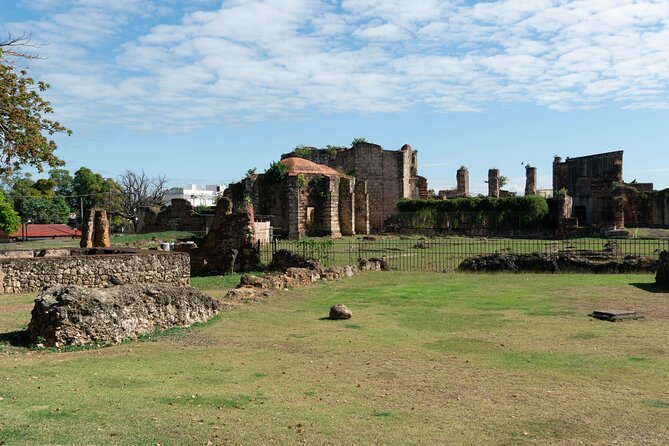
- Ruins at San Francisco and the first hospital
- The National Pantheon and Alcázar de Colón
- Two museums tied to Dominican identity
- What the $65 price really covers
- A realistic pace for three hours
- Who will get the most from this tour
- Should you book it?
- FAQ
- How long does the guided Colonial Zone tour last?
- Where does the tour begin?
- Where does the tour end?
- What is included in the price?
- Which admissions are not included?
- Is lunch included?
- Are guides available in different languages?
- How large can the group be?
- What is the cancellation policy?
Key points at a glance
- Fourteen historic stops cover museums, churches, plazas, ruins, and pedestrian streets in one outing.
- Included museum tickets cover the Museum of the Royal Houses, Metropolitan Cathedral, National Pantheon, and Rum and Cane Museum.
- Guide Angel has been praised for clear explanations, patience, friendliness, and answering questions.
- Fast visits are built into the route, with five-minute stops at several landmarks and twenty to thirty minutes at selected museums.
- Some admission costs are extra, including Ozama Fortress, Casa de Tostado, Alcázar de Colón, and Casa Duarte.
- The group can reach 50 people, so the experience may feel less personal at full capacity.
Why this walk matters in Santo Domingo
The Colonial Zone is not just a pretty old quarter. It is the center of Santo Domingo’s Spanish colonial story, with buildings and streets tied to the earliest European city established in the Americas. The route helps you connect individual places instead of seeing them as unrelated stone walls and church facades.
You begin at C. Arzobispo Meriño 206, a central address in the old city. The tour ends at the same meeting point, which is useful if you are arranging lunch, another visit, or a return to your hotel afterward. The activity lasts about three hours, though the exact pace can depend on the group and how long each stop takes.
The route is ambitious. You cover museums, churches, streets, parks, ruins, and former government buildings. That variety is its main appeal, but it also explains why the stops can feel brief. If you want a careful museum visit, this works best as an introduction. You may then return later to the places that catch your interest.
More things to do in Santo Domingo:
- Full-Day Santo Domingo City Tour from Punta Cana
★ 4.5 · 4,500 reviews - Day Trip to Santo Domingo from Punta Cana
★ 3.5 · 659 reviews - Punta Cana: Santo Domingo Day Trip with Tickets and Lunch
★ 3.8 · 584 reviews
Royal Houses Museum begins the story
The Museum of the Royal Houses, or Museo de las Casas Reales, occupies two sixteenth-century palaces. These buildings once served the Spanish captaincy general and provincial administration, so the site helps explain how colonial power was organized.
The scheduled visit lasts about thirty minutes, making it one of the more substantial indoor stops. The ticket is included, which adds real value to the $65 price. You get more than an outside view of a handsome historic building. You also have a chance to see the setting where colonial government operated.
One practical warning matters here. The museum has been closed at times, and a guide may not always have the latest information about a closure. If this museum is a major reason for booking, confirm its operating status before you go. A closed site can change the value of the tour, especially if you expected several included admissions.
The cathedral and the first streets
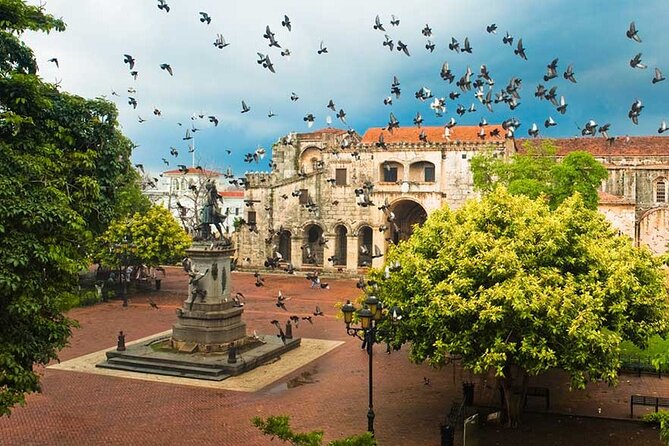
The Catedral Primada de América receives about fifteen minutes. Its Gothic features include ribbed vaults, heavy walls, and three doors, with two Gothic entrances and a main Plateresque doorway. Even with a short visit, the building gives you a strong visual anchor for the city’s religious past.
The tour then moves through Calle Las Damas, identified as the first street in Santo Domingo and the first street in the Americas. Its name refers to the colonial-era ladies who walked there. The five-minute stop is brief, but the street itself is easy to remember because it links several major monuments.
You also visit Calle El Conde, the capital’s only pedestrian street. At about one kilometer long, it serves as a commercial center for the Colonial Zone. This is where the old district feels less like a museum and more like a part of present-day Santo Domingo. The ten-minute stop gives you a taste of shops, movement, and everyday city life without taking the tour far from its historical focus.
Ozama Fortress gets only five minutes
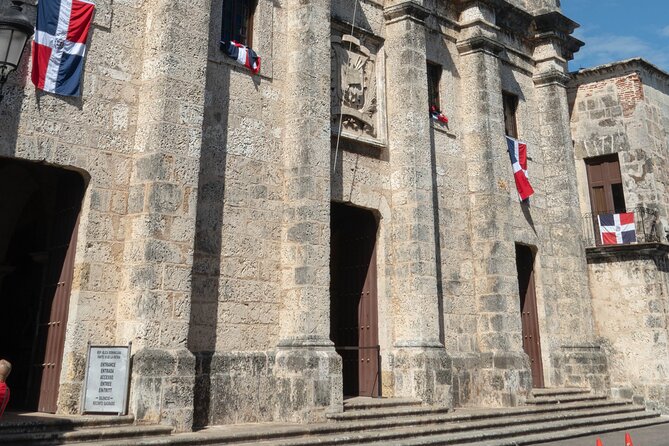
Fortaleza Ozama is one of the Colonial City’s major monuments. The Spanish built it during the colonial period, and its stone walls point to the military role of Santo Domingo in Spain’s American empire.
The planned stop is only five minutes, and admission is not included. That is the clearest example of the tour’s quick survey style. You can see the fortress and hear its place in the story, but you should not expect time to explore it at length or study every section.
If the fortress is high on your personal list, ask the guide how much of the grounds the group will enter. You may decide to return independently, provided you have enough time and are willing to pay the separate admission. The same advice applies to other paid sites along the route.
A few more Dominican Republic trips worth weighing up
- Half-Day Buggy Guided Adventure for Amber Cove and Taino Bay
★ 5.0 · 219 reviews - Guided E Bike City Tour in Punta Cana
★ 5.0 · 137 reviews - Half Day Private Tour in Dominican Republic with Local Guide
★ 5.0 · 113 reviews - Saona Private Tour with Own Guide and Transport from Punta Cana
★ 5.0 · 104 reviews
Casa de Tostado and the small details
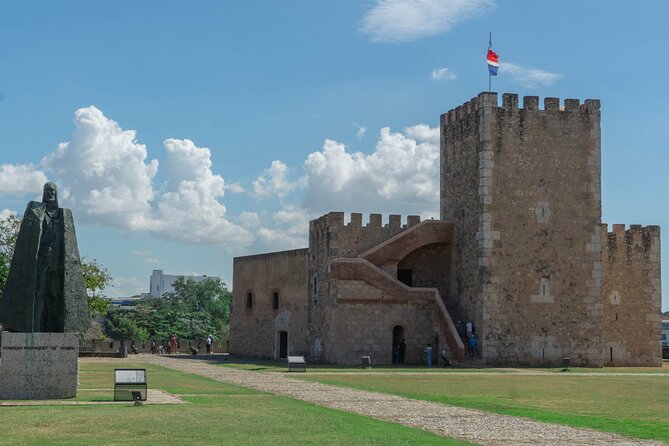
Casa de Tostado receives another five-minute stop. The house takes its name from Francisco Tostado de la Peña, a notary public for the governor. Its facade has a twin window in Elizabethan Gothic style, described as unique in the Americas.
This is the sort of detail a guide can make useful. On your own, you might walk past the window without understanding why it matters. In a five-minute stop, the value lies in having the feature pointed out and placed in context, not in touring the whole house.
Admission is not included. Since the stop is short, you should view it as an exterior highlight unless the guide explains that entry is available during your visit.
Parque Colón and the religious center
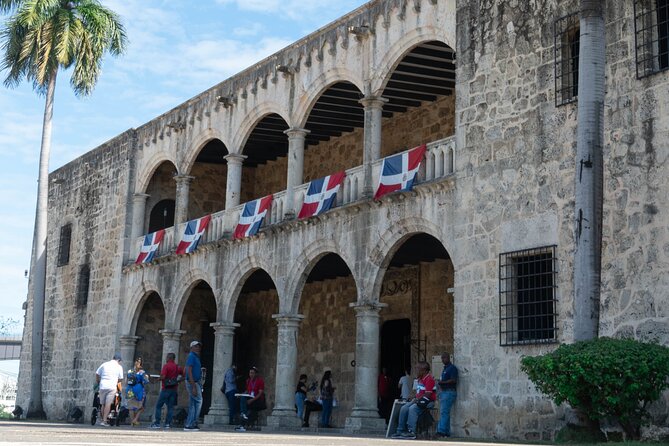
Parque Colón was the main social and celebration square during the colonial era. Today, it remains one of the central plazas in the old city and is used as a gathering point near important religious buildings.
The stop lasts about five minutes. That is enough to orient yourself, look around, and connect the park with the cathedral and nearby streets. It is not enough for a long pause, a detailed architectural study, or much independent time.
The Dominican Church and Convent is described as the oldest Catholic building in the American continent. It was the first in the New World and in Santo Domingo. The tour gives it five minutes, so again, the main benefit is historical orientation. You learn why the building matters, then continue through the district.
Ruins at San Francisco and the first hospital
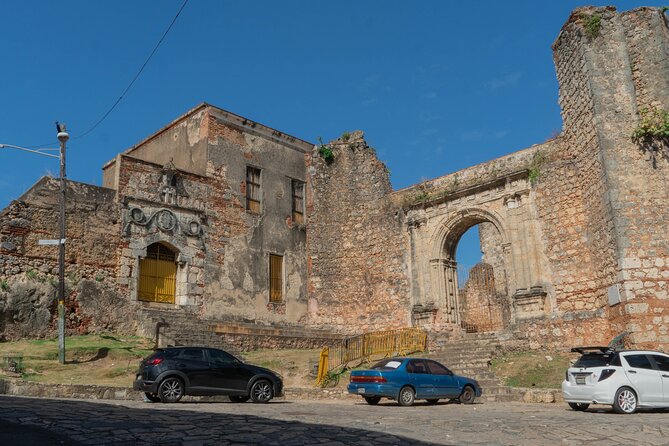
The Monastery of San Francisco is one of the country’s important ruins and forms part of the Colonial City World Heritage area. Its damaged walls offer a different experience from the preserved cathedral and palaces. You see how age, weather, and time have shaped the old quarter.
The five-minute visit is enough to view the remains and hear the basic story. It will not satisfy anyone who wants a detailed architectural walk, but it adds texture to the tour. Not every historic site survives in perfect form, and these ruins make that clear.
The Hospital San Nicolás de Bari receives the same brief treatment. Construction began in 1503 under Nicolás de Ovando, and it is identified as the first hospital in the Americas. The stop is free, but the schedule suggests a quick look rather than a full interior visit.
These short stops work well if you prefer variety. They work less well if you want a slow, focused study of each landmark.
The National Pantheon and Alcázar de Colón
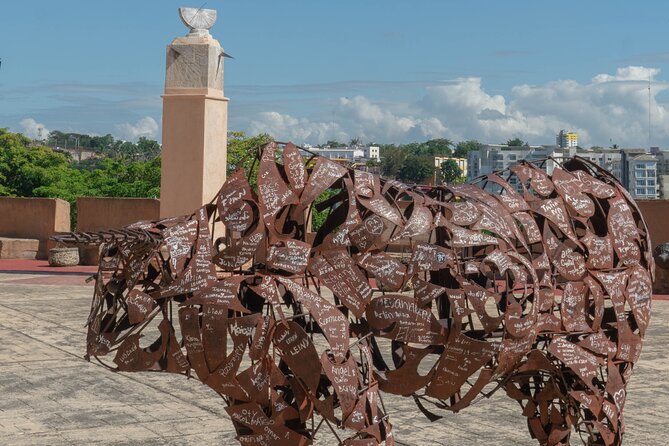
The National Pantheon receives about ten minutes, with admission included. This mausoleum honors important figures in Dominican history and is one of the key monuments in the Colonial Zone.
Ten minutes gives you more time than some of the street and ruin stops, but it remains a compact visit. Listen closely to the guide’s explanation, since the building’s purpose is central to understanding Dominican national memory. If you prefer reading every inscription and taking your time indoors, you may want to return later.
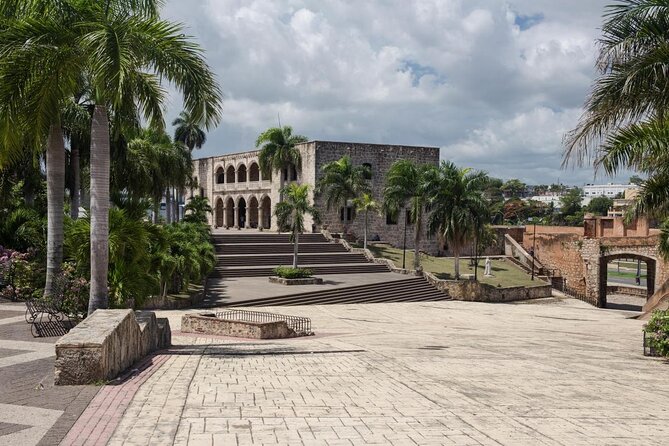
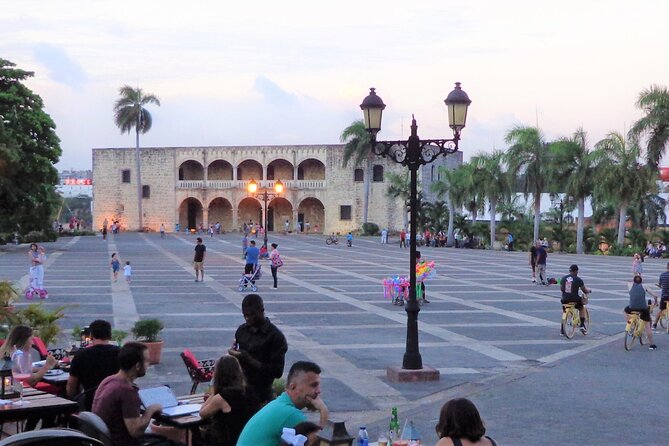
The Alcázar de Colón gets twenty minutes. Located in Plaza de España, this early sixteenth-century palace was the residence of Don Diego Colón and is also known as the Viceroyalty Palace. Its position and size make it one of the most important stops on the route.
Admission is not included, so the value depends on whether the group enters or views the palace from outside. Ask this at the start of the tour. A twenty-minute visit can be worthwhile, but you should know in advance if a separate ticket is needed.
Two museums tied to Dominican identity
Casa Duarte was the home of Juan Pablo Duarte, born in 1813 and honored as a Dominican national hero. The museum connects the colonial setting with the later development of Dominican national identity.
The planned visit lasts twenty minutes, but admission is not included. That extra cost may matter if you are comparing this tour with a private walking tour or a route that includes all entries. Still, the house offers a useful change of focus. The tour is not only about Spanish colonial rule. It also points toward the people and ideas that shaped the Dominican Republic.
The Rum and Cane Museum is scheduled for twenty minutes, and admission is included. Located in the Colonial Zone, it presents the story of Dominican rum in an interactive format. This is a practical addition to the route because it connects local history with a product closely associated with the country.
The museum also breaks up the architecture-heavy portions of the walk. After churches, palaces, ruins, and government buildings, a look at rum and sugarcane gives the tour a more social and economic angle.
What the $65 price really covers
At $65 per person, this is not the cheapest way to walk around the Colonial Zone. You can see many streets and exterior landmarks without paying for a tour. The price makes more sense if you want a guide to explain the sites and you plan to use the included museum tickets.
Included admission covers the Museum of the Royal Houses, the Metropolitan Cathedral, the National Pantheon, and the Rum and Cane Museum. That reduces your extra costs, though you still need to budget for entry to Ozama Fortress, Casa de Tostado, Alcázar de Colón, and Casa Duarte if the group visits their interiors.
The value also depends on group size. The maximum is 50 people, which is a large group for a walking tour. A group that size can make it harder to hear, ask questions, or stay close to the guide. On the other hand, group discounts may help if you are booking for several people.
The guide is a key part of the price. Angel has been singled out for knowing many people along the route, answering questions, and offering a friendly, patient explanation. That kind of local connection can make a fast walk feel more personal. Still, guide quality may vary, so you should not assume every departure will have Angel.
A realistic pace for three hours
The listed times add up to roughly three hours, but the route includes fourteen stops. Several last only five minutes, while the longest museum visits take twenty to thirty minutes. Walking between locations, gathering the group, and handling museum entry will shape the actual pace.
You should wear comfortable shoes and expect to remain on foot for most of the experience. The tour is near public transportation, and most people can participate. Service animals are allowed. Lunch is not included, so plan to eat before or after the tour rather than expecting a meal break during it.
Guides are available in several languages. If language is important to you, select or confirm your preferred option when booking. Confirmation arrives at booking, and the activity returns to the original meeting point.
The tour requires good weather and a minimum number of participants. If poor weather or low enrollment cancels the experience, you can choose another date or receive a full refund. For your own cancellation, cancel at least 24 hours before the start time for a full refund. Changes or cancellations within 24 hours are not refunded.
Who will get the most from this tour
I would choose this tour for a first visit to Santo Domingo, especially if you want the basic story before exploring on your own. The route gives you a clear map of the old city and shows how government, religion, defense, commerce, ruins, and national identity fit together.
It also suits visitors who prefer a guide in a language other than English or Spanish, since several languages are offered. Families and mixed-interest groups may appreciate the variety. One person gets churches, another gets military history, and someone else gets the Rum and Cane Museum.
I would be more cautious if you want long museum visits or detailed architectural study. The short stops are a built-in limit. I would also think twice if you dislike large groups. With up to 50 participants, the experience may feel more like a guided orientation than a quiet, personal walk.
The price can be worthwhile when the included admissions match your interests. If the Royal Houses Museum is closed or if several non-included sites are only seen from outside, the value drops. Check those details before booking, and ask which locations will be entered on your date.
Should you book it?
Book this tour if you want a structured introduction to Santo Domingo’s Colonial Zone, appreciate historical explanation, and plan to visit the included museums. The route is broad, the guide can add useful local context, and Angel has shown the patient, friendly manner that makes a crowded walk easier to enjoy.
Skip it if you want to move slowly, choose your own stops, or spend serious time inside each museum. In that case, use the route as a planning guide and explore the district independently.
For most first-time visitors, I see this as a useful orientation with genuine historical range, not a deep museum tour. Go in expecting a brisk survey, confirm which admissions are covered, and you’ll have a fair idea of what the $65 buys.
FAQ
How long does the guided Colonial Zone tour last?
The activity lasts approximately three hours.
Where does the tour begin?
It begins at C. Arzobispo Meriño 206, Santo Domingo 10210, Dominican Republic.
Where does the tour end?
The activity ends back at the original meeting point.
What is included in the price?
Museum tickets are included. The listed route specifically includes admission to the Museum of the Royal Houses, Metropolitan Cathedral, National Pantheon, and Rum and Cane Museum.
Which admissions are not included?
Admission is not included for Ozama Fortress, Casa de Tostado, Alcázar de Colón, or Casa Duarte.
Is lunch included?
No. Lunch is not included.
Are guides available in different languages?
Yes. Guides are offered in several languages.
How large can the group be?
The activity can have a maximum of 50 participants.
What is the cancellation policy?
You can cancel at least 24 hours before the start time for a full refund. Cancellations or changes made less than 24 hours before the start time are not refunded. If poor weather or insufficient enrollment cancels the tour, you can receive a full refund or choose another date or experience.
Just added around Dominican Republic
- The 7 Hidden Beaches In Samaná & Las Galeras★ 4.0 · 6 reviews
- Puerto Plata: Buggy Adventure with Local Guide★ 4.7 · 6 reviews
- Transportation from PUJ Airport to Bavaro and Punta Cana★ 5.0 · 6 reviews
- Private Boat Nature Tour of Saona Island★ 5.0 · 6 reviews
- Full day tour to samana bay from punta cana★ 4.0 · 6 reviews
- Souvenirs of Rancho Real cigars★ 5.0 · 6 reviews
- Private Airport Transfer to/from Punta Cana Airport and La Romana★ 4.5 · 6 reviews
- Secrets Royal Beach – Round Trip Shuttle – Punta Cana Airport★ 5.0 · 6 reviews
Guided, compared.
Half-Day Buggy Guided Adventure for Amber Cove and Taino Bay
Read our review →
Half Day Private Tour in Dominican Republic with Local Guide
Read our review →
Saona Private Tour with Own Guide and Transport from Punta Cana
Read our review →

Guided Puerto Plata City Tour – Fortress, Rum & Umbrella Street
Read our review →
Guided Tour in Four Wheels (ATV) by Macao Beach, Taíno Cave and Typical House
Read our review →Browse the lists this tour appears in