
Reviewed · SANTO DOMINGO TOURS
Zona Colonial Hictorical Tour with a local artist
Santo Domingo’s Colonial Zone makes the most sense when someone connects its stone buildings to the island’s wars, independence, and political struggles. This walk does that with Gaudy Mercy, a local artist and historian who brings more than 15 years of study to a route from the Ruins of San Francisco to Puerta del Conde.
I like two things right away: the small group limit of six, which gives you room to ask questions, and the mix of famous sights with less obvious context about Dominican culture. I also like that Mercy’s background in Hip Hop and the present-day arts scene adds a modern voice to a very old quarter.
The main consideration is pace. The tour is advertised at 90 minutes, yet the listed stop-by-stop times add up to about 100 minutes, including the snack break. You will cover a lot of ground, so this suits you better if you want a lively overview than a slow visit inside every museum.
In This Review
- Key points at a glance
- Why Gaudy Mercy changes the feel of the walk
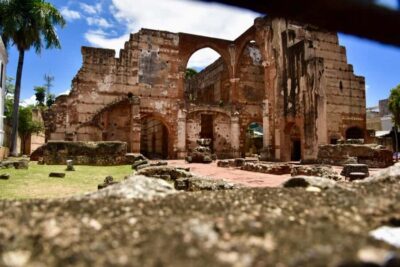
- Starting among the San Francisco ruins
- Plaza de la Hispanidad and the Alcázar de Colón
- Fifteen minutes inside the National Pantheon
- Ozama Fortress and the military side of the city
- Montesino, Las Casas, and the voices of debate
- Convents, parks, and the city’s changing identity
- From the city gates to the April Revolution
- A snack and souvenir at Kiskeyana by Mercy Bar
- What $30 gets you
- Who should book this Colonial Zone walk?
- My verdict: book it for context, not just monuments
- FAQ
- Where does the tour begin?
- Where does the tour finish?
- How long does the tour last?
- Is museum admission included?
- What languages are available?
- How many people can join the tour?
Key points at a glance
- A historian with an artist’s voice: Gaudy Mercy links architecture, politics, music, and everyday Dominican culture.
- Four centuries in one walk: The route moves from the Spanish arrival in 1492 to the April Revolution of 1965.
- A compact route through major landmarks: San Francisco, the Alcázar, the Pantheon, Ozama Fortress, and the city gates all appear.
- Small groups matter: With no more than six people, questions and conversation can shape the walk.
- Food and a keepsake are included: The visit to Kiskeyana by Mercy Bar ends the experience with a local snack and souvenir.
- Good value at $30: You receive a guided historical walk, entry to the National Pantheon, a snack, and a souvenir, while other museum admission costs extra.
Why Gaudy Mercy changes the feel of the walk
The most important part of this experience is not the number of monuments. It is the person explaining them.
Gaudy Mercy is presented as a well-known Dominican artist in Hip Hop music and culture, as well as a historian with more than 15 years of experience. That combination gives her two useful tools. She can explain the formal facts of a building, then connect them to the country’s social and cultural life.
That matters in the Colonial Zone. A row of old walls can become a dry parade of dates if nobody explains why the buildings mattered, who controlled them, and how the city changed. Mercy’s role is to connect architecture with invasions, destruction, independence, and the political growth of the island.
You can take the tour in English or Spanish. English-language guests have described Mercy’s English as very strong, and her approach is interactive rather than purely lecture-based. If you ask questions or want a point explained again, the six-person cap should make that easier.
The tour also appears suitable for mixed ages. A family with a 13-year-old found that Mercy could keep both adults and a teenager involved, while other guests valued her humor and storytelling. That is a useful sign if you are traveling with children or teenagers who may not last through a formal museum talk.
More things to do in Santo Domingo:
- Full-Day Santo Domingo City Tour from Punta Cana
★ 4.5 · 4,500 reviews - Day Trip to Santo Domingo from Punta Cana
★ 3.5 · 659 reviews - Punta Cana: Santo Domingo Day Trip with Tickets and Lunch
★ 3.8 · 584 reviews
Starting among the San Francisco ruins
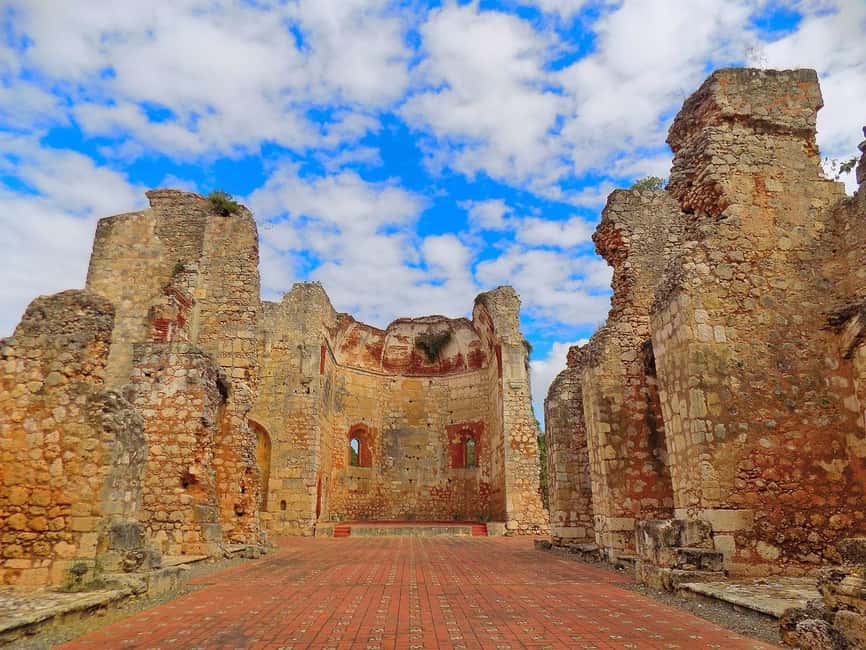
Meet at the Monumento Ruinas del Monasterio de San Francisco, at approximately 18.4766021, -69.8855771. The guide waits at the meeting point, and the walk begins at the Ruins of the Convent of Saint Francis.
These ruins set the tone well. You are not starting with a polished display case or a long museum introduction. You begin with exposed stone and the remains of one of the early religious foundations in the first European city established in the Americas.
The planned explanation here is short, about five minutes. That is enough to establish the architectural and colonial setting before you move into the wider city. You should not expect an extended archaeological visit at this first stop. Think of it as the opening chapter of a walking story.
From here, the tour places Santo Domingo in a larger timeline beginning in 1492. The route does not stop at Spanish arrival as if that were the whole story. It continues through conquest, conflict, independence, and the April Revolution, giving you a broader view of how the city and country developed.
Plaza de la Hispanidad and the Alcázar de Colón
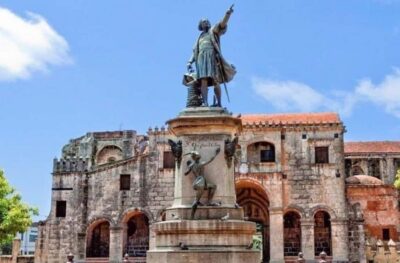
At Plaza de la Hispanidad, Mercy spends about 10 minutes on the setting. Public squares in the Colonial Zone help you understand how the city was organized, and this stop gives the tour space to discuss the Spanish foundations of Santo Domingo.
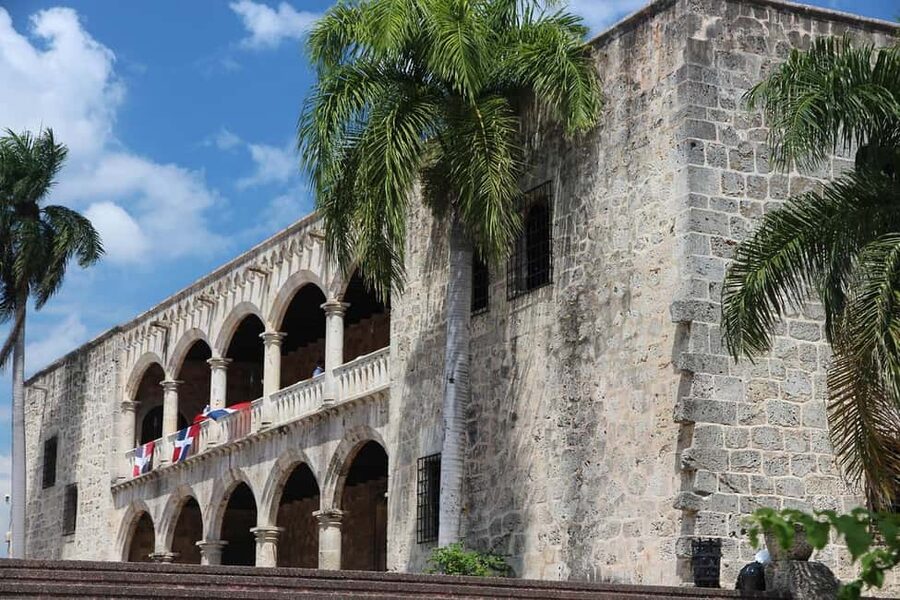
Next comes the Alcázar de Colón, one of the district’s most recognizable landmarks. The exterior receives a short, five-minute explanation. This is a good example of the tour’s approach: you get the building’s place in the city and its historical role, but you are not given a long indoor visit.
That distinction is important when planning your day. The price does not include general museum admission, so you should not assume that the brief stop at the Alcázar replaces a full visit. If the palace is high on your list, return later with extra time and a separate admission budget.
The same applies to the Museum of the Royal House. The tour gives it another five-minute stop, enough for orientation and context. You can learn why the building matters and decide if you want to come back for a more detailed look.
I like this format for a first morning or afternoon in the Colonial Zone. You get a map in your head before choosing which interiors deserve more of your time. The drawback is that anyone hoping to linger over exhibits may find the schedule too brisk.
Fifteen minutes inside the National Pantheon
The National Pantheon of the Dominican Republic receives the longest landmark stop, at about 15 minutes. The tour includes admission here, which adds real value to the $30 price.
The Pantheon gives the historical story a national focus. Instead of looking only at colonial construction, you move toward the people and events that shaped the Dominican Republic. Mercy can place the building within the country’s political development and help explain how memory and national identity are presented in a formal setting.
Fifteen minutes is still not a full museum visit. It is enough for a guided introduction and a focused look, but you may want to return if you prefer to read every inscription or inspect the interior at your own pace.
This is one of the stops where the small group helps. A large crowd can make a brief interior visit feel rushed and impersonal. A group of six or fewer allows the guide to keep the explanation connected to the people in front of her.
Somewhere else in the Dominican Republic, a completely different day:
- Punta Cana: All Inclusive Santo Domingo Full-Day City Tour
★ 4.1 · 553 reviews - Santo Domingo: Los Tres Ojos, Boca Chica & More
★ 4.8 · 219 reviews - Historical Santo Domingo Day Trip from Punta Cana
★ 4.0 · 176 reviews - Walking Tour from Santo Domingo City
★ 4.5 · 167 reviews
Ozama Fortress and the military side of the city
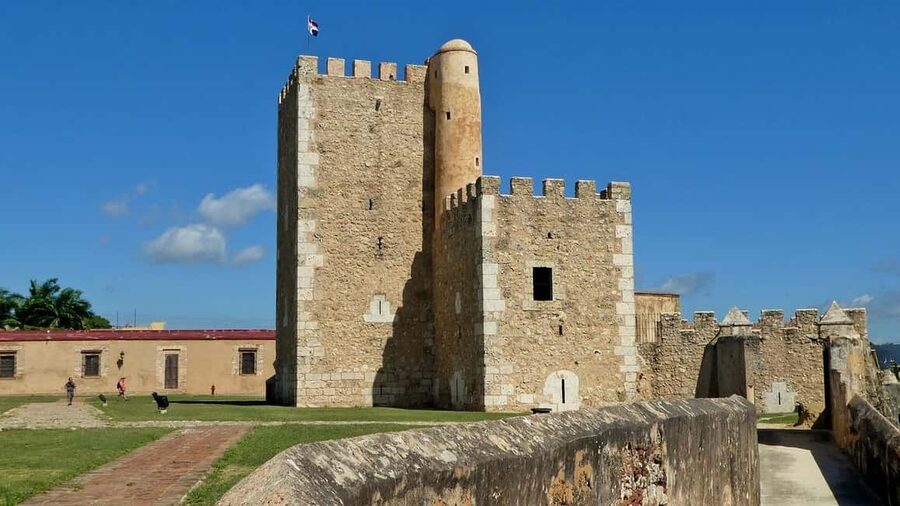
Fortaleza Ozama receives about 10 minutes. The fortress brings a military edge to the route, showing that Santo Domingo’s early importance was not only religious or administrative.
A walk through the Colonial Zone can easily become a parade of churches and grand residences. Ozama changes the rhythm. Its presence points to defense, control, and the threats faced by a port city exposed to foreign attacks and internal conflict.
Mercy’s wider approach also includes invasions and devastations, so this stop should help you see the district as a place that was fought over, damaged, and rebuilt. You are getting the history of a contested city, not just an attractive old quarter.
Again, the time is brief. You will receive a guided view of the fortress rather than an exhaustive examination of every section. Wear comfortable shoes and be ready to keep moving, since the experience is built around walking from one chapter to the next.
Montesino, Las Casas, and the voices of debate
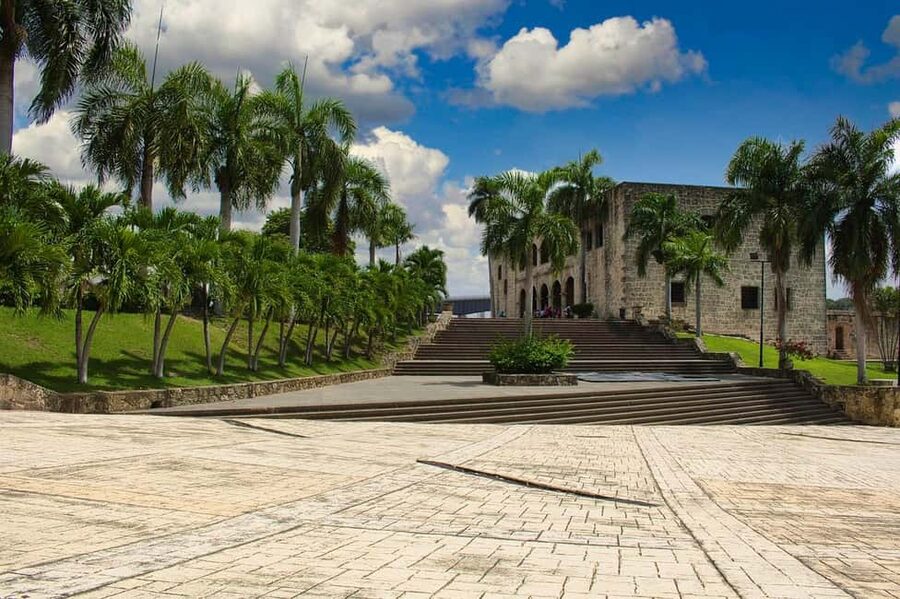
The Monument to Friar Antonio de Montesino receives about 10 minutes. This is a thoughtful pause because the monument points toward debates about the treatment of Indigenous people during Spanish rule.
The route then continues to Fray Bartolomé de las Casas Park for about five minutes. Together, these stops give the colonial story a more critical angle. You are not asked to admire old buildings without considering the people affected by the system that built them.
That approach is one of the tour’s strongest features. Mercy has been described as proud of her country while still offering a critical view of its past. For you, that means the walk can move beyond dates and construction styles into questions of power, morality, and the competing voices inside colonial society.
The stops are short, so the depth will come through conversation rather than long formal lectures. If this part interests you, ask questions. The limited group size makes it more realistic to pause for clarification than on a standard coach tour.
Convents, parks, and the city’s changing identity
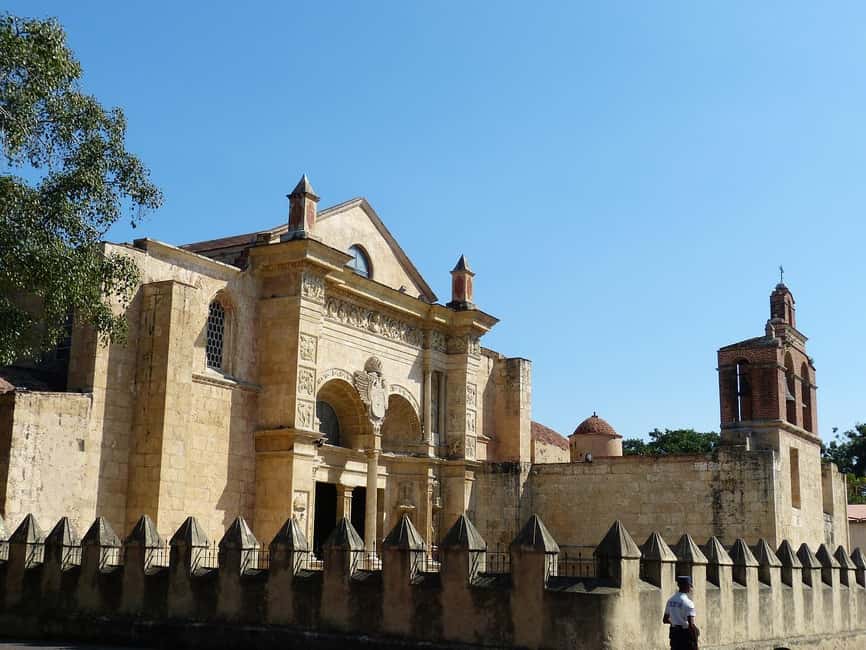
Santo Domingo Convent gets about five minutes, followed by five minutes at Duarte Park. These stops help fill in the city’s religious and civic story.
The convent reflects the importance of religious institutions in the early city. Duarte Park shifts the focus toward Dominican identity and public life. The contrast is useful: you see how the Colonial Zone served both colonial institutions and later national ideals.
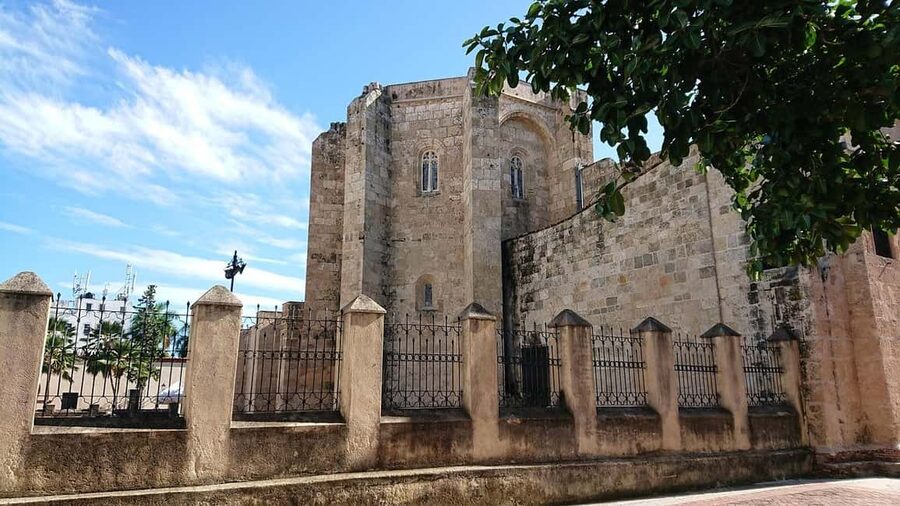
The walk then reaches Iglesia y Convento Regina Angelorum, another five-minute stop. You will hear about the church and convent as part of the district’s architectural and religious fabric, but the time does not allow for a long interior study.
Taken together, these short visits work best as a connected lesson. One building alone may not transform your understanding of Santo Domingo. Several in sequence show how churches, convents, plazas, forts, and gates formed a working city.
From the city gates to the April Revolution
The final historic section moves through Puerta de la Misericordia and Puerta del Conde, with about five minutes at each.
Puerta de la Misericordia is one of the places where the city’s defensive structure meets its later political story. Puerta del Conde carries the route toward independence and modern Dominican history. The walk ends near the statue of Francisco Alberto Caamaño Deñó, placing the April Revolution of 1965 into the final chapter.
That ending is a smart choice. Many Colonial Zone walks finish once the Spanish-era monuments are covered. This one keeps going into a twentieth-century political conflict, reminding you that the old city is not sealed off from living national memory.
The statue of Caamaño Deñó gives the final section a human and political focus. You are not simply ending beside another stone gate. You are ending with a reminder that the area has continued to matter long after the colonial period.
Because the last stops are short, you may want to continue exploring Puerta del Conde after the tour. The guide gives you the context, then you can decide how long to remain.
A snack and souvenir at Kiskeyana by Mercy Bar
The itinerary includes a 15-minute stop at Kiskeyana by Mercy Bar for local snacks. This is more than a practical break after walking. It connects the historic route to contemporary Dominican culture and to Mercy’s own creative work.
The snack is included, as is a souvenir. Those extras are modest, but they improve the value of a $30 experience, especially when paired with admission to the National Pantheon.
Do not expect this stop to become a full meal or a long bar visit. Fifteen minutes is a short pause, designed to finish the walk and give you a chance to talk with the guide. If you need lunch, plan that separately.
The route is listed as finishing at Puerta del Conde, even though Kiskeyana by Mercy Bar appears just before the final endpoint. Treat the snack stop as part of the closing section, then confirm the exact finish point with Mercy when you meet.
What $30 gets you
At $30 per person, this is a strong value if you want a guided introduction rather than a museum-by-museum day.
Your fee covers:
- A 90-minute guided walking experience
- English or Spanish commentary
- A maximum group size of six
- Admission to the National Pantheon
- A local snack
- A souvenir
- A route covering major colonial, religious, military, and political sites
The important limit is museum admission. The Alcázar de Colón and Museum of the Royal House are included as guided exterior or orientation stops, not as general admissions. If you want to go inside those museums, budget separately.
The price also makes more sense if the group does not fill. Several people have ended up with a private or nearly private walk because the group remained small. That is not guaranteed, but the cap gives you a better chance of personal attention than a large city tour.
Free cancellation up to 24 hours before the start and the option to reserve now and pay later add flexibility. The tour is also listed as wheelchair accessible, though the route includes old ruins and historic streets, so you should confirm any particular mobility needs before booking.
Who should book this Colonial Zone walk?
I would choose this tour if you want history explained in plain language, with room for questions and some connection to current Dominican culture.
It suits:
- First-time visitors to Santo Domingo
- People who prefer walking to a formal bus tour
- Families with older children or teenagers
- English- or Spanish-speaking visitors
- Anyone interested in the link between history, politics, music, and art
- Visitors who want a compact overview before returning to museums on their own
It may not suit you if you want long, quiet museum visits, extensive photography time, or a slow architectural study. The route covers many places in 90 minutes, so the reward is range and interpretation rather than exhaustive detail.
Bring water, sun protection, and comfortable footwear. Those are sensible choices for any outdoor walking route in the Colonial Zone, and the timetable leaves little room for a long pause before the snack stop.
My verdict: book it for context, not just monuments
I would book this experience if I had limited time in Santo Domingo and wanted the Colonial Zone to make sense quickly.
The best feature is Gaudy Mercy’s combination of historical study, storytelling, and local artistic perspective. The route also earns its price through the small group, Pantheon admission, snack, and souvenir. Most important, it carries the story from 1492 to 1965 instead of stopping with colonial architecture.
The only real caution is the tight schedule. You will see many important places, but most receive only five to ten minutes. Book it as your orientation walk, then return to the Alcázar, Royal House Museum, or Fortaleza Ozama if one catches your interest.
If you want a personal, lively introduction to Santo Domingo’s past and present, this is a sensible $30 choice. If you want a slow museum day, choose a longer private tour or use this walk only as a starting point.
FAQ
Where does the tour begin?
The meeting point is the Monumento Ruinas del Monasterio de San Francisco, also known as the Ruins of the Convent of Saint Francis. The listed coordinates are 18.4766021, -69.8855771.
Where does the tour finish?
The historical route finishes at Puerta del Conde, beside the statue of Francisco Alberto Caamaño Deñó. A snack stop at Kiskeyana by Mercy Bar takes place near the end of the scheduled route.
How long does the tour last?
The advertised duration is 90 minutes. The listed stop timings add up to roughly 100 minutes, so you should confirm the exact pacing and finish details with the guide.
Is museum admission included?
Admission to the National Pantheon is included. Entrance to the other museums is not included, including the Alcázar de Colón and the Museum of the Royal House.
What languages are available?
The live tour is offered in English and Spanish.
How many people can join the tour?
The experience is limited to six participants. Depending on bookings, your group may be smaller and could be private for your party.
Just added around Santo Domingo
- Cumayasa Private Buggies Tour from Santo Domingo★ 3.5 · 6 reviews
- Hiking and Hidden River Tour in Santo Domingo★ 5.0 · 6 reviews
- Santo Domingo Day Trip From Punta Cana★ 3.5 · 6 reviews
- Half Day Comatillo Off-Road Experience★ 5.0 · 6 reviews
- Santo Domingo Tour From Punta Cana – Zona Colonial, Los Tres Ojos★ 3.0 · 6 reviews
- Historical Tour in the Colonial City of Santo Domingo★ 4.5 · 6 reviews
- Roundtrip Private Transfer from Santo Domingo Airport (SDQ)★ 3.0 · 6 reviews
- Punta Cana: Santo Domingo City Tour with Lunch★ 4.5 · 7 reviews
Santo Domingo Tours, compared.
Full-Day Santo Domingo City Tour from Punta Cana
Read our review →
Historical Santo Domingo Day Trip from Punta Cana
Read our review →
Historical Tour with a visit to the Columbus Lighthouse and Tres Ojos Park
Read our review →Browse the lists this tour appears in