
Reviewed · WORKSHOPS
Kiteboarding Lessons in Punta Cana
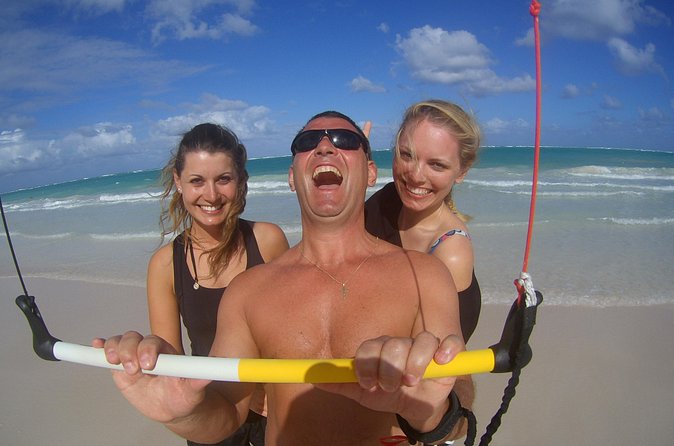
Punta Cana turns kiteboarding into a sport you can start from scratch, not just watch from the beach. At the Punta Cana Kitesurf Academy, instructors such as Humberto build your skills in stages, beginning with wind theory and a small trainer kite before moving into the water with a full-sized kite.
I like the three-hour daily format, which gives you enough practice time without making each session feel endless. I also like the four-person limit, since technical coaching is far more useful when your instructor can watch your kite control closely. The main consideration is weather: lessons need suitable wind, and you must make your own way to the academy unless hotel transport is selected.
In This Review
- Key points to know before booking
- Why Punta Cana works for a first kiteboarding course
- Lesson one: wind theory, trainer kite, and safe control
- Lesson two: full-sized kite, relaunches, and body dragging
- Lesson three: upwind recovery and your first waterstart
- What the small-group limit means for your progress
- Equipment, safety, and what the price covers
- Getting to the academy and planning your day
- Who will get the most from this course
- Practical booking advice for Punta Cana
- Should you book Kiteboarding Lessons in Punta Cana?
- FAQ
- How long are the kiteboarding lessons?
- Is previous kiteboarding experience required?
- How many people can join the course?
- What happens in the first lesson?
- What will I learn in the second lesson?
- What will I learn in the third lesson?
- Is hotel pickup included?
- Are food and drinks included?
- What happens if bad weather cancels the lesson?
Key points to know before booking
- Three lessons follow a clear progression: You move from wind theory and trainer-kite control to water relaunches, body dragging, board recovery, and waterstarts.
- Small groups mean more useful coaching: The maximum group size is four people, a sensible setup for a sport that depends on constant correction.
- Humberto is the main instructor named in the course information: Other teaching names connected with the school include Marino, Felix, Nelson, and Cuco.
- The course suits first-timers and returning riders: No previous experience is needed, while experienced kiteboarders can use the sessions to sharpen technique.
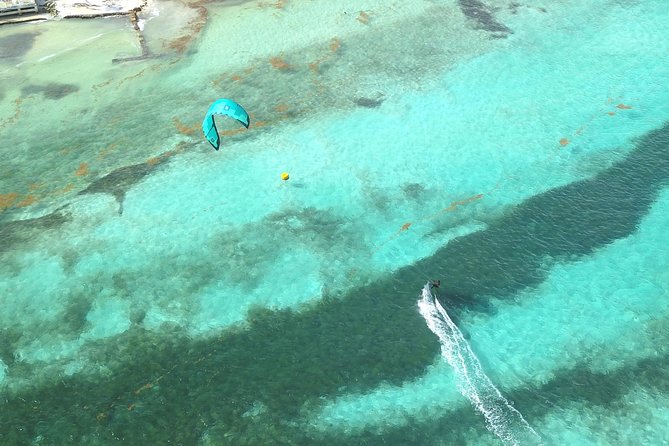
- Punta Cana offers warm, inviting water: Several sessions take place near Pearl Beach Club, where shallow, flat water has been used for learning.
- The listed price is $215.39 per person: Check whether that price matches your chosen one, two, or three-day option before paying.
Why Punta Cana works for a first kiteboarding course
Kiteboarding can look wild from shore. A rider holds a large kite, catches the wind, and skims across the water at surprising speed. The first lesson reveals that the sport is less about brute strength than timing, wind awareness, and steady control.
That makes Punta Cana a useful place to learn. The course is built around the basics rather than throwing you straight onto a board. You begin on land with wind theory and the wind window, the area of sky where the kite can safely move. This may sound technical, but it gives you a mental map before the kite starts pulling.
You also learn how the equipment works. That matters because kiteboarding has several safety systems and moving parts. Understanding the kite, lines, bar, and wind direction helps you react calmly instead of guessing.
The setting adds to the appeal. Punta Cana is known for warm Caribbean water, and the academy operates in an area where lessons can include relatively shallow water. A shallow practice zone can make early body-dragging exercises less intimidating, although you still need a moderate level of fitness and comfort in the water.
The school has also worked in spots such as Uvero Alto and has taken riders farther afield to Las Salinas, near the dunes of Baní, when conditions call for it. Do not assume an excursion to Las Salinas is part of this standard booking. Treat that as a possible arrangement to discuss directly, not as an included stop.
More things to do around Punta Cana:
- Adventure Bundle: Monkeyland, Ziplines & Buggies Punta Cana
★ 5.0 · 10,715 reviews - Private Airport Punta Cana to La Romana Bayahibe or Casa de Campo Resort Area
★ 5.0 · 6,662 reviews - Punta Cana Zipline Adventure with Buggies and Horseback Riding
★ 5.0 · 5,001 reviews
Lesson one: wind theory, trainer kite, and safe control
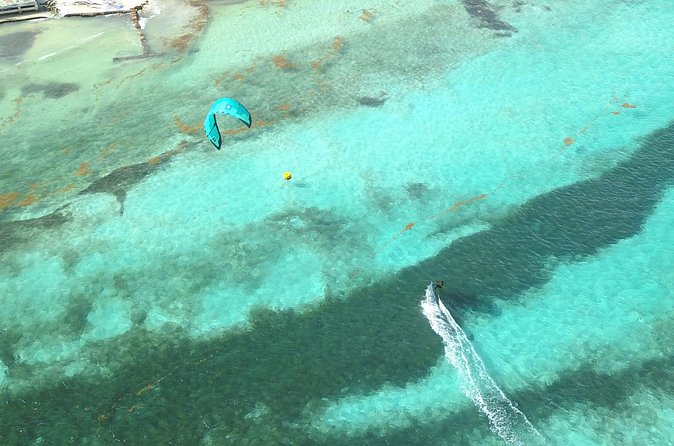
Your first session begins at the academy, where you meet the instructor, get suited up, and listen to a safety briefing. The safety talk is not filler. Kiteboarding combines wind, water, lines, and equipment, so learning how to set up and respond to changes is central to the sport.
The first technical subject is the wind window. You learn where the kite generates the least and most power, how the wind moves across the beach, and why the kite should not be steered carelessly through its strongest zones.
Then comes the trainer kite. This smaller kite lets you practice steering before handling the power of a full-sized model. You work on basic direction changes and may practice steering with one hand. That one-handed control is a useful early step because your other hand will later need to manage the bar and body position.
I like this slow opening. It gives you a chance to build hand-eye coordination before adding water and a board. It also lets your instructor spot common problems early, such as oversteering or looking only at the kite instead of reading the wind.
The drawback is that the first session may feel more like a technical class than an action sport. If you arrive expecting to race across the water in the first hour, reset your expectations. The trainer-kite work is what makes the later water practice safer and more productive.
Lesson two: full-sized kite, relaunches, and body dragging
The second session brings you to a full-sized kite and the water. You begin to control the kite in real conditions, with the instructor helping you understand how small steering movements affect your position.
Two key skills are the water relaunch and downwind body dragging. A water relaunch teaches you how to get the kite airborne again after it falls into the water. That will happen to beginners. Learning the recovery process turns a mistake into a normal part of practice.
Downwind body dragging teaches you to let the kite pull you through the water without the board. This is one of the most practical skills in the course because it helps you move with the wind and understand how the kite generates traction.
It also prepares you for finding a board that has slipped away. Instead of fighting the kite or swimming randomly, you learn to use its pull in a controlled direction. The exercise can feel strange at first, but it is a major building block.
This is likely the point where the sport starts to feel real. You are no longer only steering a kite on the beach. You are using the wind to move across the water, and you may get your first taste of speed.
The school has used radio coaching systems in lessons, including two-way communication equipment that lets the instructor give corrections while you are out on the water. Ask before your session whether this setup is being used on your course. It can be especially helpful when you are too far away to hear ordinary instructions.
Lesson three: upwind recovery and your first waterstart
The third lesson moves toward board riding. You practice an upwind body-dragging technique, which helps you recover a board that has drifted away. This is harder than simply allowing the wind to pull you downwind, so it marks a real increase in control.
You then work on riding in both directions. Many beginners find one direction more natural than the other, often because of stance or the way they turn their head. Practicing both ways helps you avoid becoming a rider who can only travel comfortably on one tack.
The main goal is the waterstart. This is the moment when the kite pulls you from the water onto the board. It combines kite position, body placement, board angle, and timing. You may not master it immediately, but the lesson gives you a structured attempt rather than a chaotic struggle.
The first waterstart is not the same as becoming an independent kiteboarder. You will still need more practice to control speed, turn reliably, ride upwind, and handle changing conditions. Still, it is an important milestone and a satisfying target for a three-day course.
If you already kiteboard, the third session can be adjusted toward technique instead of basic waterstarts. The course is also suitable for refresher work, and the school has taught riders who had some previous lessons but wanted more confidence before riding on their own.
More hands-on sessions in Punta Cana:
- Group Surf Lessons Punta Cana – Fun, Easy & Beginner-Friendly
★ 4.5 · 121 reviews - Chocolate Master Class & Taino Concept Store
★ 5.0 · 43 reviews - Punta Cana: Saona Island VIP 4 first-class beach and sunset
★ 4.0 · 30 reviews - Private Surf Lesson Punta Cana – 1-on-1 Coaching for All Levels
★ 5.0 · 27 reviews
What the small-group limit means for your progress
The maximum group size is four. That is not a private lesson, but it is small enough to keep the teaching focused. In a kiteboarding class, an instructor needs to watch the kite, the lines, your body position, and the water around you. A crowded class can leave you waiting too long between attempts.
Your progress will still depend on wind, fitness, and how quickly you absorb the controls. The group limit cannot guarantee that you will ride on the first day. It does make it easier for an instructor to correct mistakes before they become habits.
The teaching team connected with Kiteology DR includes Humberto, along with instructors named Marino, Felix, Nelson, and Cuco. Humberto is particularly associated with clear explanations, patient corrections, and radio instruction. If a specific instructor matters to you, contact the academy before booking rather than assuming the person you want will be available.
Families and mixed-ability groups can also use the format, but the course remains a physical activity. You need moderate fitness, and you should be ready for repeated handling of equipment, time in the water, and the effort of getting back on the board.
Equipment, safety, and what the price covers
The course includes a professional guide and a helmet. You will use a trainer kite during the first lesson and a full-sized kite during later water work. The lesson description also includes getting suited up and handling the equipment, but the only items specifically listed as included are the guide and helmet.
That distinction matters. Before you pay, ask what kiteboarding equipment is supplied, what clothing you should bring, and whether any item carries an extra fee. The school has been associated with a range of kite sizes and newer equipment, but you should confirm the current setup for your dates.
Safety instruction comes first, and the lessons build in a sensible order. You learn how the wind works, practice with less powerful equipment, and only then handle a full-sized kite in the water. The helmet is included, but a helmet alone does not make the activity risk-free. Listen closely, follow the instructor’s limits, and do not push ahead because another person in the group is progressing faster.
At $215.39 per person, the value depends on the option you select. A three-day course gives you the most structured time and the clearest path from basic kite handling toward waterstarts. A one-day course makes more sense if you want an introduction or have only a short stay. A two-day booking sits between those choices, giving you more water practice without committing to the full three-day program.
Since the booking details describe one, two, and three-day options while the summary lists an approximate duration of three days, confirm the exact price and schedule for your chosen length. The small group and three-hour sessions make the price more appealing than a short beach demonstration, especially if you want skills you can continue building later.
Getting to the academy and planning your day
You make your own way to the Kitesurf Academy in Punta Cana. The meeting location is listed in La Altagracia Province, so check the exact meeting instructions before setting out. Hotel pickup and drop-off are not included unless you select that option.
Some arrangements connected with the school have included hotel transport, but do not assume it is free or automatic for this booking. If you are staying far from the academy, ask about transport when you reserve. That can save you from spending your lesson time dealing with a long or unclear transfer.
Food and drinks are not included. Plan to eat before or after the class and bring anything you need for a three-hour outdoor session. The supplied information does not specify a restaurant stop or meal break, so do not book this as a food-and-activity outing.
The course operates in all weather conditions, but kiteboarding itself depends on suitable weather and wind. If poor weather causes a cancellation, you are offered another date or a full refund. Build some flexibility into your schedule if kiteboarding is one of the main reasons you chose Punta Cana.
Who will get the most from this course
This is a good fit if you have never flown a power kite but want a real introduction to kiteboarding. The first lesson does not assume prior knowledge, and the later sessions explain the skills needed to control yourself in the water.
It also suits an intermediate rider who wants targeted help. An instructor can work on water relaunches, body dragging, riding in both directions, or board recovery instead of spending every minute on basic theory.
Families can book together, and the small group size may help keep the experience personal. Still, the activity is not passive. You should have moderate fitness and be prepared to follow safety directions closely.
I would be more cautious about booking if your schedule is packed with no spare day. Wind sports are weather dependent, and the three-hour class may not fit neatly into a rigid holiday plan. I would also avoid treating a single day as a guarantee of polished riding. It is an introduction, not a shortcut past practice.
Practical booking advice for Punta Cana
Choose three days if your goal is to reach the waterstart stage and give yourself time to repeat the basics. The first session is about control, the second adds water recovery, and the third combines kite skills with the board.
Choose one day if you are curious, short on time, or already planning other activities. You should still get a useful introduction, but your progress may stop before the most exciting board work.
Choose two days if you want more than a sample but cannot spare a full three-day block. Ask how the sessions will be arranged around the expected wind, since the most useful sequence depends on conditions.
Contact the academy before arrival if you want a particular instructor, pickup, radio coaching, or a specific practice location. Humberto has arranged alternate instructors when needed, but availability can change. Good communication is especially useful if your group includes beginners and experienced riders.
You can cancel for a full refund if you do so at least 24 hours before the start time. Changes or cancellations inside that window are not accepted for a refund, except that weather-related cancellation by the operator offers a new date or full refund.
Should you book Kiteboarding Lessons in Punta Cana?
Book this course if you want to do more than admire kiteboarders from a resort beach. The staged lessons, three-hour sessions, and four-person cap give you a sensible route into a technical sport, and the warm Punta Cana setting makes the learning process more inviting.
The best value comes from the two or three-day options, especially if you want to reach waterstarts rather than simply hold a trainer kite. A one-day session is still worthwhile, but you should see it as an introduction.
Before booking, confirm the exact meeting point, transport, equipment, instructor, and price for your chosen course length. If you can allow some flexibility for wind and are comfortable with moderate physical effort, Kiteology DR offers a practical, personal way to learn a new water sport in Punta Cana.
FAQ
How long are the kiteboarding lessons?
Each class lasts about three hours per day. You can choose a one, two, or three-day course.
Is previous kiteboarding experience required?
No. The course is suitable for complete beginners, and returning riders can work on improving existing skills.
How many people can join the course?
The activity has a maximum of four participants.
What happens in the first lesson?
You learn wind theory and the wind window, become familiar with the equipment, and practice steering a trainer kite, including one-handed control.
What will I learn in the second lesson?
You work with a full-sized kite in the water and practice water relaunches and downwind body dragging.
What will I learn in the third lesson?
You practice upwind body dragging to recover the board, ride in both directions, and attempt your first waterstarts.
Is hotel pickup included?
Hotel pickup and drop-off are not included unless you select an option that includes transport.
Are food and drinks included?
No. Food and drinks are not included in the course.
What happens if bad weather cancels the lesson?
You will be offered a different date or a full refund if the experience is canceled because of poor weather.
Just added around Punta Cana
- Souvenirs of Rancho Real cigars★ 5.0 · 6 reviews
- Full day tour to samana bay from punta cana★ 4.0 · 6 reviews
- Secrets Royal Beach – Round Trip Shuttle – Punta Cana Airport★ 5.0 · 6 reviews
- Private Airport Transfer to/from Punta Cana Airport and La Romana★ 4.5 · 6 reviews
- “Round-Trip Private Transfer: Punta Cana Airport ↔ Uvero Alto ”★ 5.0 · 6 reviews
- City Tour with Horseback Riding, Zipline, and Dune Buggy at the Countryside★ 3.5 · 6 reviews
- TRS Turquesa- Round Trip Shuttle – Punta Cana Airport★ 4.0 · 6 reviews
- Tour EN Buggy or ATV POR la Nature EN Punta Cana★ 5.0 · 6 reviews
Workshops, compared.
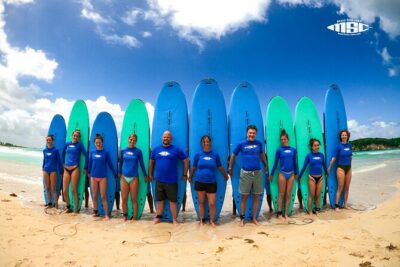
Group Surf Lessons Punta Cana – Fun, Easy & Beginner-Friendly
Read our review →

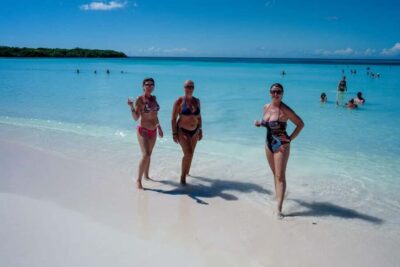
Saona Island VIP 4 first-class beach and sunset
Read our review →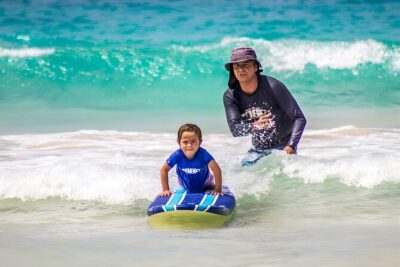
Private Surf Lesson Punta Cana – 1-on-1 Coaching for All Levels
Read our review →
Browse the lists this tour appears in